This hackathon project is part of the series, Hack your Scanner, following contributions of previous years. 2022 VASO mosaic, 2021 visual exporting scanner data with QR Modem, 2020 viewing data with ASCII art on MARS with LN_INFO. This year is about hacking your RF-coil.
Contributors: Renzo Huber1, Tyler Morgan1, Alessandra Pizzuti2, Benedikt Poser2, Barbara Dymerska3, Dario Bosch4, Yuhui Chai5, Natalia Gudino1, Joelle Sarlls1, Amir Seginer6, Sebastian Dresbach2,7, Jen Evans1, Joseph (An Thanh) Vu8, Salvatore Torrisi8, Rüdiger Stirnberg9, Monique Tourell10, Saskia Bollmann10, Monique Tourell10, Chia-Yin Wu10, Luca Vizioli11, Essa Yacoub11, Nikos Priovoulos12, Emma Bouwer12, Wietske van Der Zwaag12, Hendrik Mattern13, Jin Jin14, Daniel Gomez15, Anna Blazejewska15, Jonathan Polimeni15, Peter Bandettini1
- NIH, Bethesda, USA
- University Maastricht, Netherlands
- UCL, London, UK
- MPI for Biological Cybernetics, Tübingen, Germany
- University of Illinois Urbana-Chaimpaign, USA
- Weizmann Institute of Science, Israel
- Max-Planck Leipzig, Germany
- UCSF, VA, USA
- DZNE Bonn, Germany
- Centre for Advanced Imaging, University of Queensland, Australia
- CMRR, Minneapolis, USA
- Spinoza, Amsterdam, Netherlands
- Magdeburg, Germany
- Siemens Healthineers, Australia
- Martinos Center, MGB, USA
Project summary
Brainhack Project Description
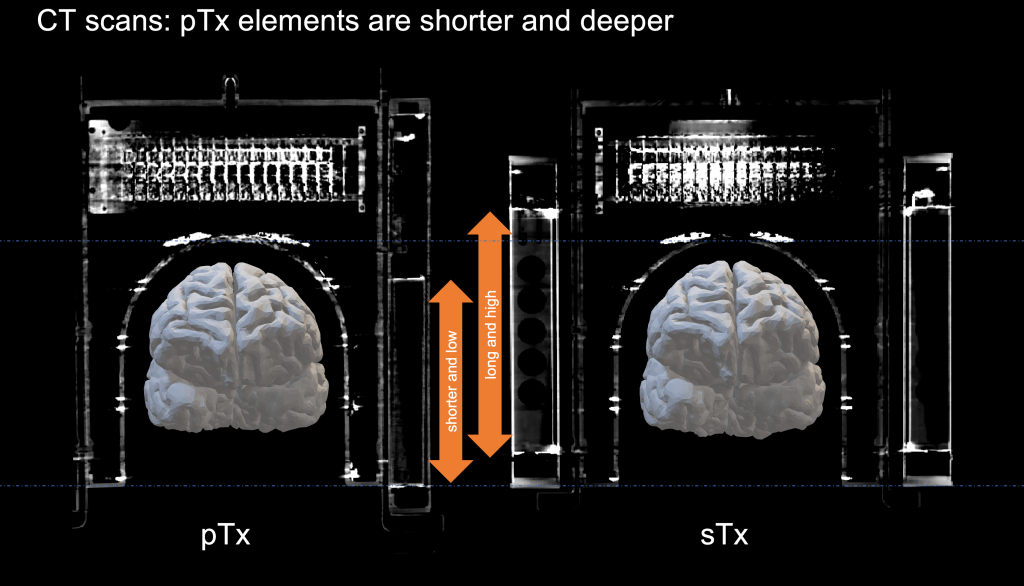
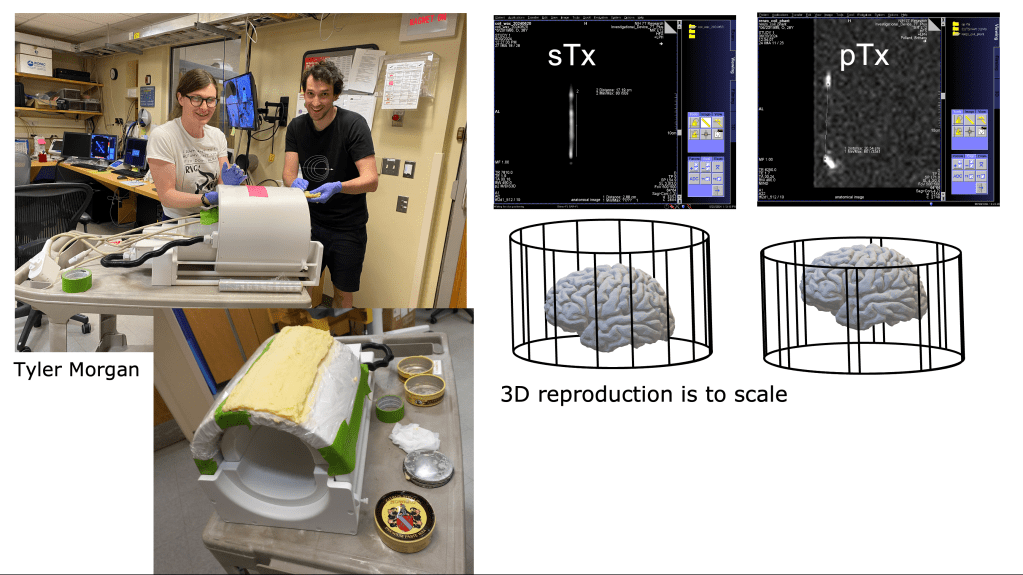
There are more than 100 7T scanners installed around the world and virtually all of them are equipped with an 32ch RF coils from Nova Medical. In the last decade, this coil model has evolved from a niche engineering challenge for prototype scanners to a mainstream FDA-approved medical product. Despite the current abundance of this coil, there are no public quality metrics about it’s stability, consistency across sites, nor across models of single channel transmit (sTx) and multi-channel transmit (pTx).
However, these QA metrics are vital for the upcoming transition of most 7T scanners. Namely, until now almost all 7T scanners were used as single-channel transit systems (e.g. SIEMENS Magentom 7T, classic and Terra). But the new generation of FDA-approved 7T scanners that are solely used as parallel transmit systems (e.g. SIEMENS Terra.X). While the common pTx Nova coil has been successfully validated for a number of clinical imaging protocols, it has never been compared with the sTX coil for highly accelerated fMRI protocols.
Pilot experiments suggest that the pTx coil performs worse in tSNR limited fMRI protocols. This is despite the fact that the transmit performance is improved.

The goals of this project is to:
- We want to learn and describe basic QA procedures of 7T RF-coils.
- We want to characterize the differences of noise characteristics in fMRI protocols across different coil models; pTx and sTx.
- We want to engage with the community to gather and compare basic QA metrics across scanners.
We hope that these results will be informative as reference data for any 7T sights that are unsure if their SNR is at the optimal level. Furthermore, we hope that findings of this project will pave the way for cross-site large neuroimaging studies.
Tutorial: switch back and forth sTx and pTx on SIEMENS Terra
Learning how to switch between pTx and sTx mode on a 7T Terra and 7T plus, respectively.
sTx to pTx
- Push green power button
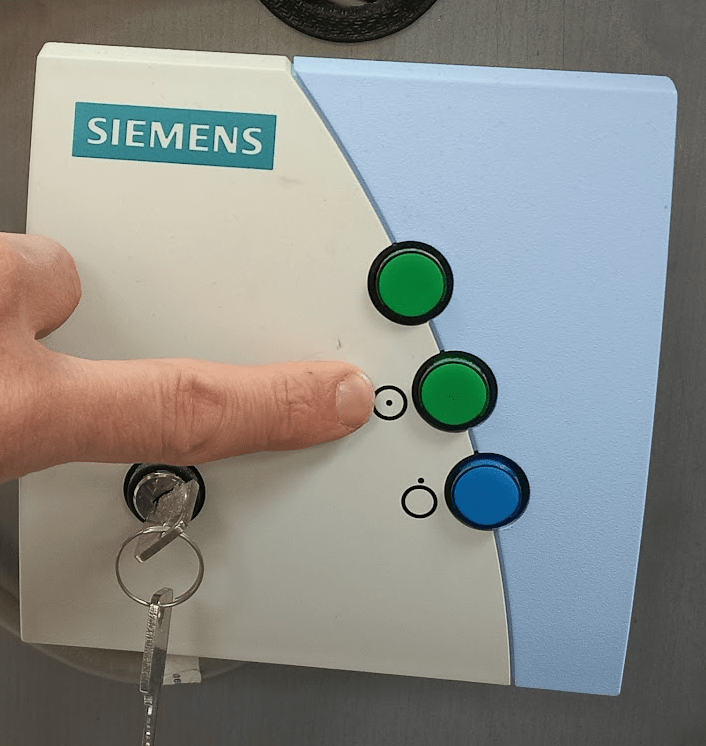
- Unplug sTx coil
- RFPA-cabinet in machine room, middle button to “set mode”, select 8-channel fbr
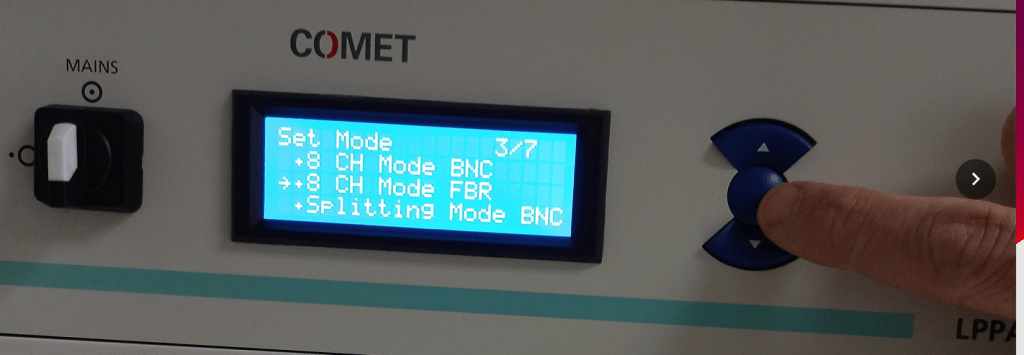
- Then turn off and turn back on and waiting for the knocking sound
- Plug in pTX head coil
pTx to sTx
- Plug single channel coil on table
- Push blue button to turn off PTX
- RFPA to “set mode” it to combine mode, reboot RFPA and wait for the knocking sound
common issue of switching at 7T plus: E-Shim error, booting failed.
If you encounter this error you can, go back to the console that was previously activated, open MARS terminal, login as root, execute: restart mr, if this does not work, try to execute: reboot mars.
Good first issue: execute basic Coil QA
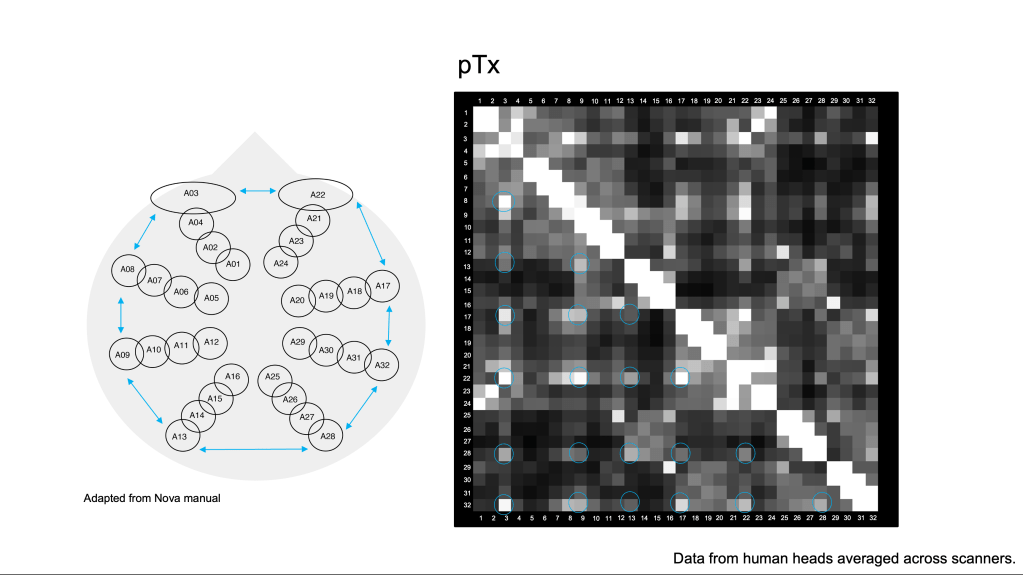
On all SIEMENS scanners, there is a standardized protocol that conveniently generates the most basic quality metric of any receive coil: coil_utils.
It can be found in the Dot-Cockpit under: default, Sequence region, Service Sequences, Default, coil_util. This sequence is designed to test the receive coil. For the pTx coil, this sequence us executed in CP (trueform) mode.
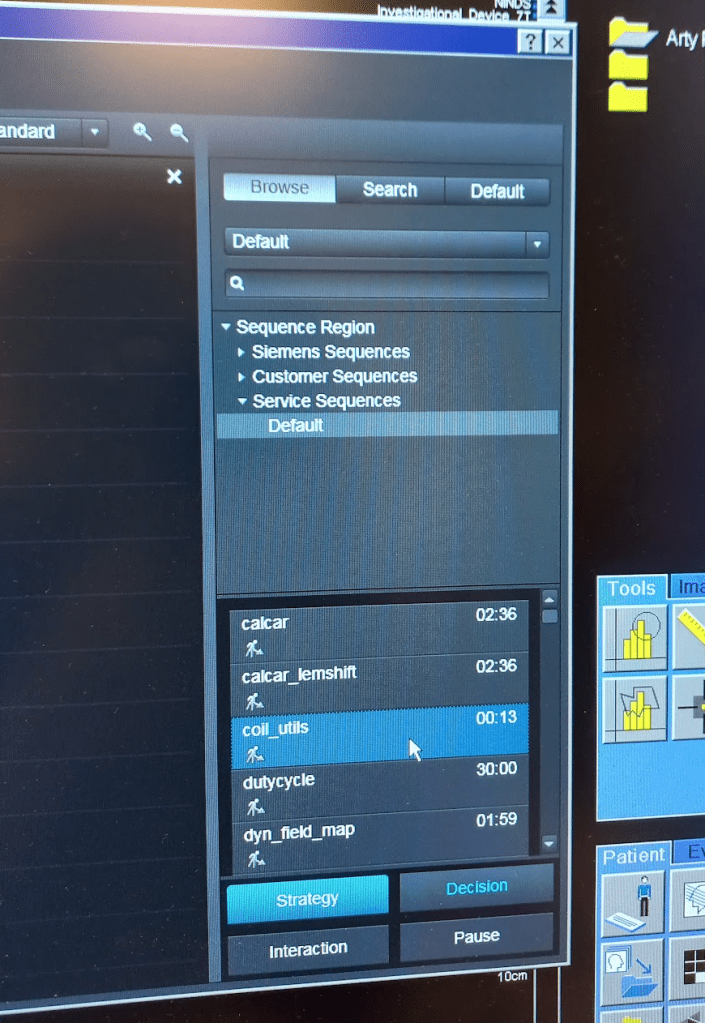
Protocol PDF and improtable exar1 files for VE12U are available here: https://github.com/layerfMRI/Sequence_Github/tree/master/Coil_util_examples.
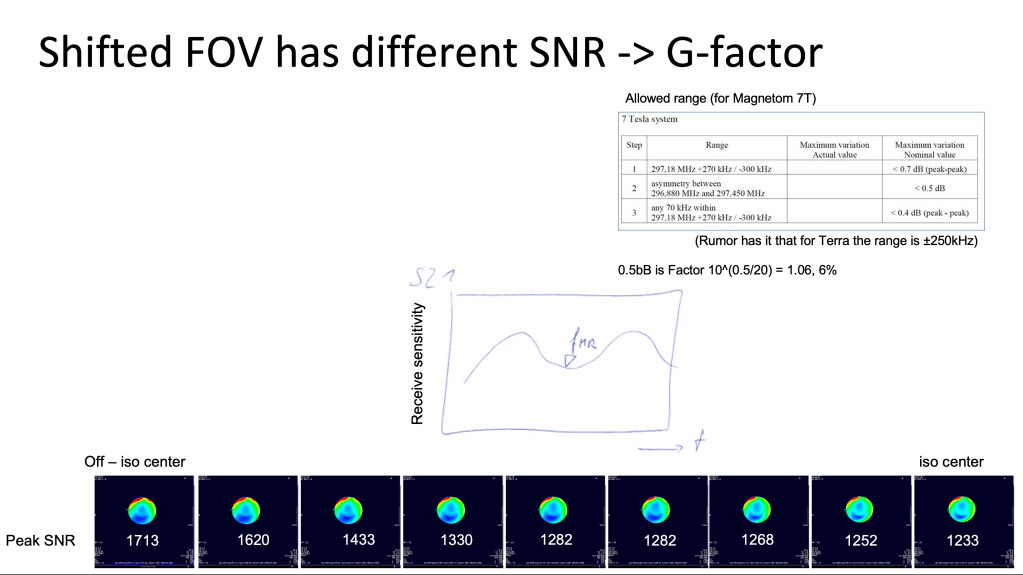
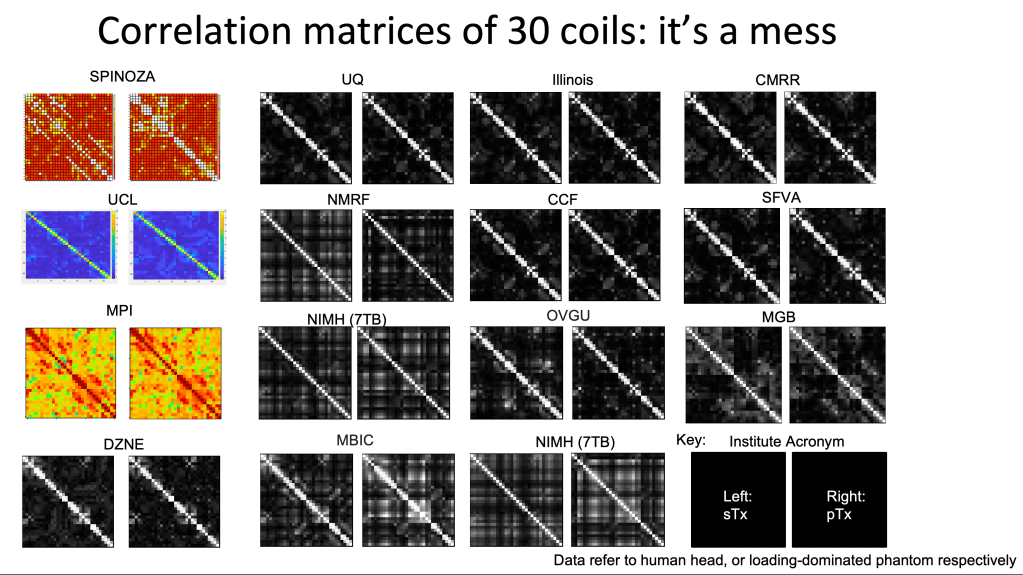
Please share correlation matrix and g-factor map.


Results




References
- Huber et al., Layer-fMRI in lower brain structures: why is it so hard and what can we do about it? 3129, ISMRM 2024. https://submissions.mirasmart.com/ISMRM2024/Itinerary/PresentationDetail.aspx?evdid=3817
Acknowledgements
We thank NINDS and NIMH for donating scan time for this project (#ZIC MH002884).
 layer fMRI blog