
On Oct 6th 2021, we aim to host the 4th virtual layer-fMRI dinner.
The board of the layer-fMRI dinner group has invited the following speakers to initiate discussions on the theme: Layer-fMRI signal origin: From neurons to vessels to BOLD.
- Amir Shmuel (McGill): The complexity of lamina resolved neuronal activity, and the spatial specificity of BOLD, CBV, arterioles and venules responses: implications for planning and interpreting depth-dependent fMRI.
- Jonathan Polimeni (MGH): Biophysical modeling for interpreting fMRI signals and relating them back to neuronal activity: contemplating the “inverse problem”.
- Evelyn Lake (Yale): Leveraging simultaneous multi-modal fMRI and wide-field optical imaging to study functional brain networks.
Moderated by Luca Vizioli and Andrew Morgan
Board: Johanna Bergmann, Avery Berman, Saskia Bollmann, Denis Chaimow, Renzo Huber, Nils Nothnagel, René Scheeringa, and Bianca van Kemenade.
The entire event will last for about 90 min (including discussion).
The meeting will be recorded and published on Youtube and embedded on this website by October 7th 2021.
Everyone is welcome. No registration required. Zoom link: https://laminauts.page.link/meeting_channel
| Brisbane | Korea | Germany | UK/UTC | New York | Minnesota | San Francisco |
| Oct 6th | Oct 6th | Oct 6th | Oct 6th | Oct 6th | Oct 6th | Oct 6th |
| 11pm | 10pm | 3pm | 2pm | 9am | 8am | 6am |
Introduction
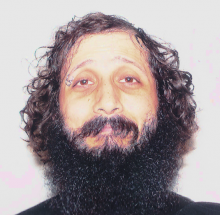
Jonathan Polimeni (MGH)
Biophysical modeling for interpreting fMRI signals and relating them back to neuronal activity: contemplating the “inverse problem”.
Abstract:
The ultimate limits of spatial and temporal resolution achievable by fMRI are dictated by neurovascular coupling, the mechanisms of blood flow regulation, and vascular architecture in the brain. While these limits are currently unknown, there is a rapidly growing body of evidence pointing to the ability of fMRI to distinguish site of activation across cerebral cortical depths, which can be used to infer the cortical layer or layers differentially engaged in specific tasks or functional networks. Because all fMRI signals currently in use are based on hemodynamics and hence are influenced by local vasculature, understanding how patterns of neural activity are transformed into the fMRI signals we measure can potentially aid not only in the interpretation of our data but also opens possibilities to better estimate the location (in space and time) and amplitude of the neural response from the fMRI response—to the extent that this transformation is “invertible”.
Motivated by this, the goal of this presentation is to survey recent work towards building biophysical models of the fMRI signals to help with this interpretation, with a focus on models using realistic microvascular networks and dynamics based on optical imaging and microscopy data. These models are built on first principles and are described by meaningful anatomical and physiological parameters. I will present initial results demonstrating how these models can be used to predict well- known differences in the hemodynamic response across stimulus configurations and cortical depths. While these models are complex, and simulations are computationally intensive, they can be also used to help inform simpler “lumped” models that are more practical for routine use, and are applicable to predicting various BOLD and non-BOLD fMRI contrasts.
Another goal of this presentation is to engage the laminar fMRI community and have an open discussion about the strengths and weaknesses of this modeling approach, consider these against other approaches to improve neural specificity in fMRI, and discuss how to combine this framework with advanced acquisitions and analysis methods towards our shared objective to measure neural activity across cortical layers with fMRI.

The complexity of lamina resolved neuronal activity, and the spatial specificity of BOLD, CBV, arterioles and venules responses: implications for planning and interpreting depth-dependent fMRI
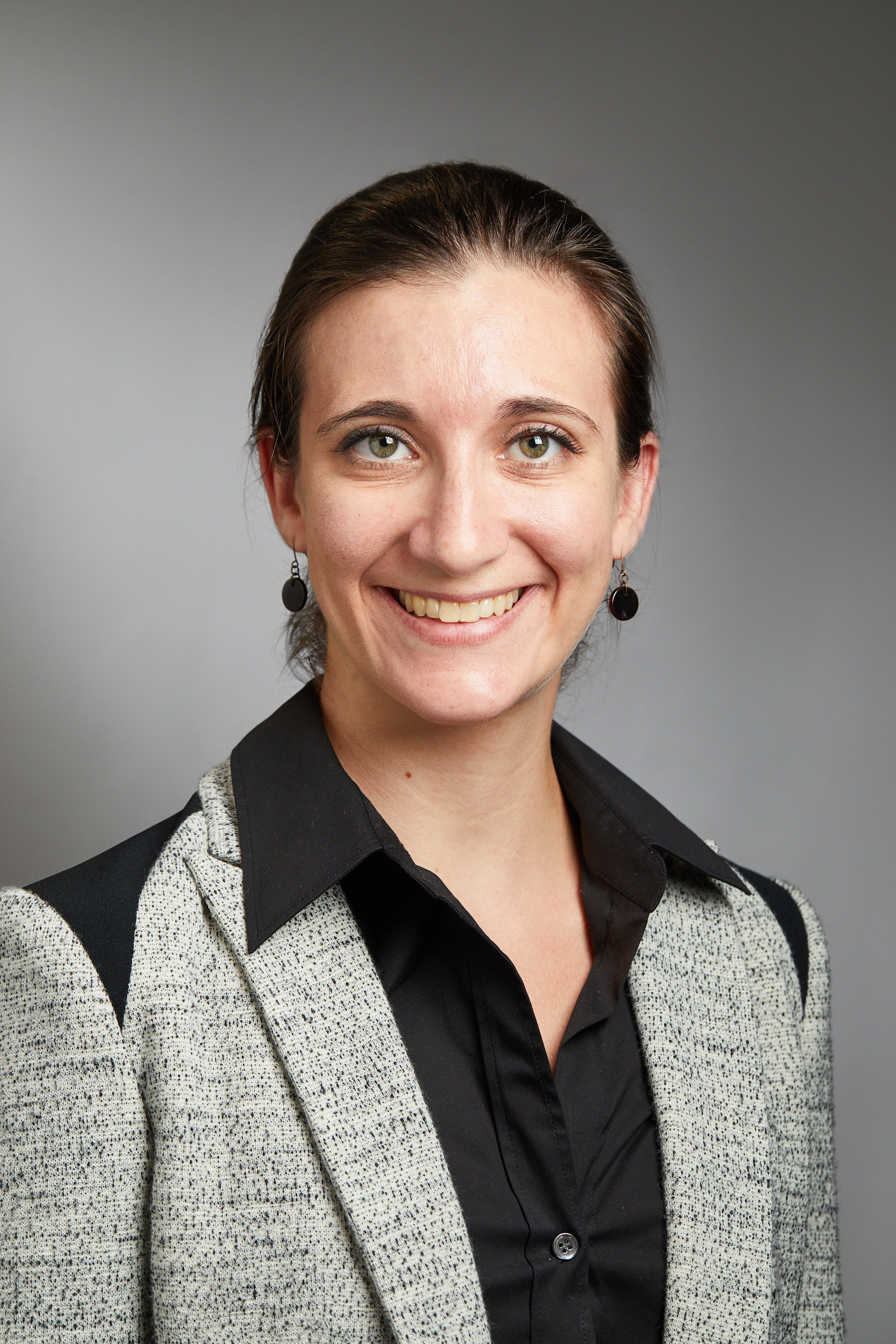
Leveraging simultaneous multi-modal fMRI and wide-field optical imaging to study functional brain networks.
 layer fMRI blog