2019 Minnesota workshop on Cortical Depth-Resolved fMRI Methods

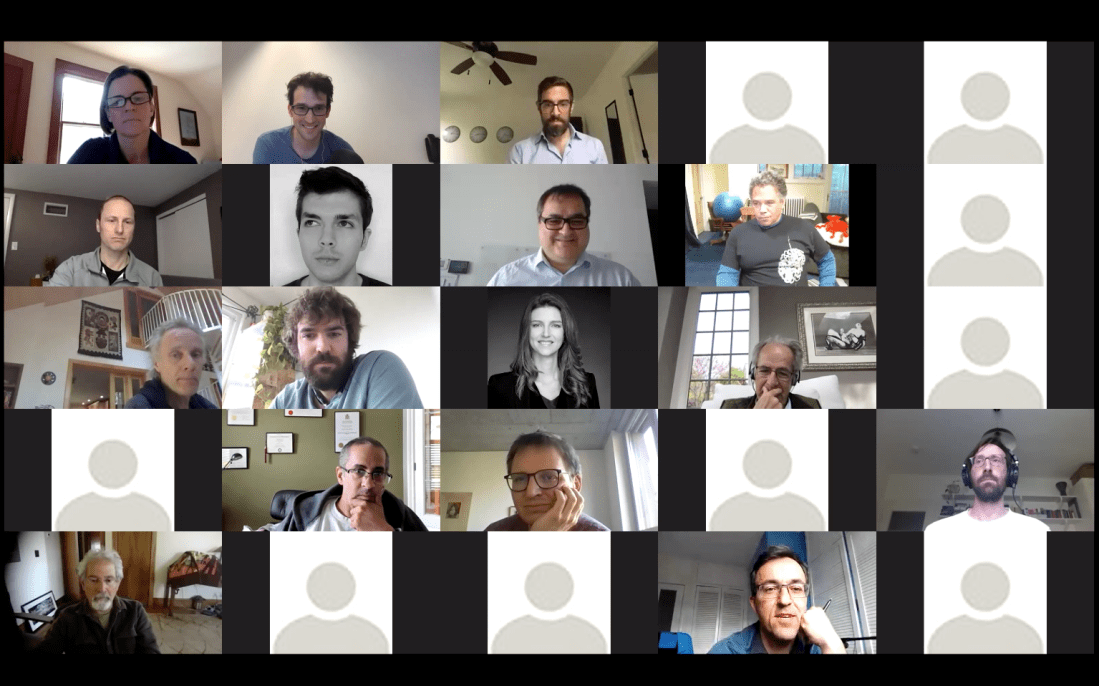
This post summarizes the presentation, tutorials, and discussions of the 2019 UHF Minnesota Workshop on Cortical Depth-Resolved fMRI Methods, Nov 12th-Nov 13th.

OrganiserCheryl Olman
PresentersAlessio FracassoNatalia PetridouJonathan PolimeniKamil UludagTim van Mourik, and Renzo Huber

Terminology consensus 🙂

  • Layerification: The process of assigning depth-values to each voxel.
  • Lettuce Head: Levelset with acoustic noise.
  • Partial Volume: Ill-defined term for partial coverage. A field of view that is smaller than what freesurfer considers as “whole brain”.

Workshop Content

Cheryl Olman: Introductions and general outline: 

Jonathan Polimeni: Overview of laminar fMRI best practices and current challenges

Part 1:

Part 2:

Hot Topic discussions included: 

  • How many cytoarchitectonically-defined layers are there, is 6 really a good number?
  • How should we estimate the PSF?
  • Resolution losses from resampling should be kept as small as possible. Viable strategies include: 1.) working in upsampled space, 2.) combining (concatenating) all transformations into one single transformation, 3.) using adequate interpolation functions. 
  • Layer smoothing can be helpful to depict layer activation features, but they should always be accompanied with unsmoothed maps. Otherwise it can result in circularity. 
  • “shifting” the cortical depth based on the functional baseline signal a la Peter Koopmanns might introduce circularity. Tim: this approach is debunked. 
  • The accuracy of the surfaces (segmentation lines) is significantly higher than the voxel resolution. This is possible with predefined assumptions of signal intensities of GM and WM and a partial voluming model. -> higher resolution of the anatomy helps to improve the accuracy. However, it’s more important to keep the SNR up.

Renzo Huber: Hands on scanning at 7T scanning: Optimizing an EPI acquisition

Tim van Mourik, Using GIRAFFE to set up analysis pipeline (boundary-based registration)

Part 1:

Part 2:

Alessio Fracasso: Hands on analysis: Segmentation and layerification without surfaces

  • Digital capture failed; we’re working on creating a replacement
  • Hot topic discussion: 
    • The presented pipeline estimates layers with level-sets, without surfaces in voxel space.

fMRI contrasts:  GE-BOLD, SE-BOLD and non-BOLD

  • Natalia Petridou: GE, SE, GRASE
    • Hot Topic discussion:
      • GRASE has the advantages of both GE-BOLD and SE-BOLD, or does GRASE have the disadvantages of both GE-BOLD and SE-BOLD?
      • Different layers and different contrasts have different timing response functions.
  • Renzo Huber: non-BOLD (VASO, ASL …)
    • Hot topic discussions: 
      • There is no clear winner of sequences. Sequence comparisons are never fair. 

Kamil Uludag: T1-weighted EPI and laminar BOLD response modeling

  • Hot topic discussions: 
    • There is no easy ground-truth of tissue type segmentation. When comparing methods, one needs to look at both approaches.
    • -> taking the difference between task conditions and using the layer-dependent activation difference for neuroscience interpretations is not adequate <- This does not mean that previous studies, who did this are necessarily wrong.
    • The vein size difference across layers can be incorporated in the model as CBV. 
    • The vascular deconvolution method might come along with noise-amplification. When you have unreliable data quality to begin with, the deconvolution model might make more problems than it solves.
    • The surprising CBF profiles are in agreement with previous studies from Ingo Marquardt and from electrophysiology.

Natalia Petridou: 3D-EPI 

  • Hot topic discussions: 
    • It is not so straightforward to correct for physiological noise when you have long readouts in 3D-EPI. The most appropriate approach is to take it as a snapshot acquisition at k-space center. 
    • K-space based approaches like RetroKCor might be more appropriate for 3D-EPI 
    • It is not clear, why the physiological noise should become less severe in the thermal noise dominated regime? It’s more important how big the physiological noise is with respect to the BOLD magnitude? It’s less important how big the physiological noise it with respect to the thermal noise?
    • Offline-discussion with Natalia Petridou: Motion is the single biggest limitation in high-res fMRI.  The most effective way to minimize motion is to engage the participant. E.g. reward, if motion is low. E.g. penalty-based longer time in the scanner (repetition of runs), when motion is large.

Renzo Huber: Hands on Analysis: Layerification with LAYNII

  • Recording Part 1:
  • Recording Part 2:
  • Hot topic discussions:
    • How many layers should be extracted?
      • Renzo Huber: extract as many layers as possible (potentially after upsampling).
      • Tim Van Mourik: extract as many layers as independent samples across cortical depth.
      • Consensus among all: the least subjective choice is to have as many layers as voxels. These layers are sparse and non-independent.
      • Consensus among all: any number of layers is ok. 
    • Which interpolation function should one use to work in upsampled space
      • Consensus is that nearest neighbor is not adequate because it assumes that the signal would be equally distributed within the voxel.
      • Most adequate interpolation function would be zero-filling in k-space, which corresponds to sinc-interpolation in image space.
      • Consensus among all: if the result depends on the interpolation function, we shouldn’t trust the result to begin with.
    • How should we do statistics with sparse and non-independent voxel sampling across depth?
      • Consensus among all: This is an unsolved problem. We don’t even know which signal magnitude to trust. Thus, it’s even less clear, how to do statistics with it. 
    • Why is it such an obstacle, if a software package has dependencies to GSL. Future versions of LAYNII should not be dependent on it?
    • It shouldn’t be so hard to make LAYNII compatible with nii.gz, Future versions should be able to read nii.gz. 
    • The advantages and disadvantages of equi-volume and equi-distance approaches where discussed. Renzo advises to use equi-distance. While it contains negligible biases with respect to the cyto-layers, it does not come along with noise amplification as equi-volume.

Cheryl Olman:  A “complete” scanning session (MP2RAGE, some 3D GE EPI comparisons, T1-EPI)

  • Hot topic discussions: 
    • Setup of T1-EPI, how to analyze it correctly?

Alessio Fracasso: Surface-based visualizations/partial brain segmentations

  • Hot topic discussions: 
    • Looking at EPI data in anatomical space. 
    • How to minimize curvature bias of segmentation -> higher resolution. 

Cheryl Olman: Discussion sessions throughout the workshop: 

  • What are the most important challenges of layer-fMRI? 
    • Nominal resolution is not the same as effective resolution
    • There is no ground truth of quantifying the effective resolution (acquisition, biological, resampling).
    • Layerification is hard with distortion and registration challenges. 
    • Anatomical segmentation
    • The biggest challenges were obtained in survey from ISMRM study group: https://doi.org/10.7490/f1000research.1115658.1
  • What should every manuscript include?
    • All standard sequence parameters must be reported. Furthermore, parameters of echo-train length, partial Fourier etc. should be mentioned too.
    • Images of EPI data quality, e.g. representative tSNR maps, activity maps in native EPI space. 
    • Data of segmentation quality and registration quality should be shared.

Cheryl Olman: Wrap-up discussions:

  • Where do we want to host workshop content?
  • How to continue discussions: 
    • Active members of the community (who know how to use SLACK) will continue discussions on the SLACK workspace depthresolvedfmri.slack.com, This channel will be open to every layer-enthusiast (in an invitation basis). If you have not received an invite yet, please contact us. 
    • Parts of the discussions will be mirrored on layerfMRI.com, including:
      • Meeting minutes
      • Continuously updated list of layer-fMRI papers (with a focus on human fMRI).
      • List of job opportunities in layer-fMRI.
      • List of layer-fMRI abstracts of current conferences. 
  • Do we want a white paper on a set of QC metrics (tSNR in ROI, true image resolution in RO/PE/SL directions, ?) that can be used to compare acquisitions?
    • Response from all: Maybe 
    • Cheryl will contact the field about this soon.
    • As opposed to the field of ASL, we don’t have a 20 year ongoing discussion or well-established agreed-upon standards. Thus, it might be challenging.  But there will probably be a basic set of agreed best practices.
  • Future satellite meetings: We want to keep organizing satellite meetings and informal meet-ups at conferences like ISMRM (Who volunteers? Who will attend? (e.g. Renzo and Luca?)), OHBM (-> Amir Shmuel), SfN and the BRAIN Investigators meeting (-> Sean Marrett).

Which sequence is best for layer-fMRI? A graphic story in cynical metaphors.

This post is part of a series on graphical metaphors (continue here).


There are many sequences that have been proposed to be suited for layer-fMRI. This list includes GE-BOLD (Menon 1999), SE-EPI (Goense 2006), CPMG (Scheffler 2021), ASL (Kashyap 2021), diffusion fMRI (Truong 2009), 3D-GRASE (Moerel 2018), calibrated BOLD aka CMRO2 mapping (Guidi 2020), VASO (Hua 2013), phase regression (Stanley 2021), onset-time imaging (Yu 2014), depth-dependent deconvolution (Markuerkiaga 2021), CVR-calibration (Guidi 2016), and many more.

In this blog post, I want to summarise the take-home message from the seemingly never ending  battle between researchers fighting about the best sequence for layer-fMRI. I seek to do so by means of cynical metaphors in graphical form. Because, why not. There are plenty more serious discussions already elsewhere1,2,3.

Continue reading “Which sequence is best for layer-fMRI? A graphic story in cynical metaphors.”

Third Virtual Layer-fMRI ‘Dinner’: Cognitive Models and Cortical Layers.

On April 20th 2021, the third virtual layer-fMRI took place. 120 (unique) attendees joined and discussed the connection between layer-fMRI and cognitive models.

This meeting is held as a succession of the first two virtual dinner in May 2020, and Sept 2020:

In this third event, it will be discussed how the layer-fMRI methodologies might be able to inform Cognitive models. The three speakers are researchers that are working to examine cognitive processes whose study is aided by understanding the structure and function of cortical layers. These cognitive processes could include memory, attention, learning, dreaming, language or cortical predictions (plus many, many more!)

Floris de Lange will give an overview of work done by his group to capture laminar fMRI activity changes in the visual cortex for prediction, attention and bottom-up input. André Bastos will present results of laminar LFP recordings and how feed-forward gamma-band and feedback alpha/beta band modulations help to understand cognitive effects including attention, working memory, and prediction processing. Michelle Moerel will talk about how computational models can be combined with laminar fMRI to understand human auditory processing. 

Below you find the important links of the virtual event. Embedded videos of the talks, discussions, and a summary of the hot topics are going to be added on the day after the event.

Continue reading “Third Virtual Layer-fMRI ‘Dinner’: Cognitive Models and Cortical Layers.”

Brain QR Modem

Are you ever annoyed how hard it is to get brain data off the scanner? The fact that scanners usually contain private information about patients and are thus embedded in maximally restrictive clinical cyber-security environments, makes it quite complicated to get access to the data. Especially when visiting collaborative sites.

In this this Hackathon project, we aim to develop a purely uni-directional (safe) data streaming “hack” to transfer MRI data directly to the cloud by means dynamic QR codes.

In the early days of the Internet, modems (modulator-demodulator) were used to (i) convert digital information into audio streams, (ii) transfer them across telephone lines, and (iii) convert them back into the digital domain. Here, we aim to do the same thing with pixel data of MRI scans. However, instead of audio signal we will use machine-readable visual information: QR codes.

Specific aims of the Brain QR modem

1.) We will develop an ICE-Functor that converts pixel data to QR codes in real time

2.) We will develop an Android app that converts the streamed QR coded into a series of png that are directly streamed to the cloud (Drive folder).

3.) We will develop a LayNii program that converts stacks of PNG images into Nii files.

This project contains many consecutive components of a modem. And will likely take 2-3 rounds of Hackathons to be completed.

Continue reading “Brain QR Modem”

layer-fMRI seminar

DateSpeakertopic
March 2ndAlard RoebroeckImaging layer specific meso- and microstructure in the human brain with ex vivo MRI and light sheet microscopy
Feb 16th Suvi HäkkinenFunctional imaging of hippocampal layers using
VASO on the Next Generation (NexGen) 7T
Feb 2nd
2026
Dana RamadanMacrovascular contributions to resting-state fMRI signals: A comparison between EPI and bSSFP at 9.4 Tesla
Jan 19th
2026
Tony CarricarteLayer-specific spatiotemporal dynamics of feedforward and feedback in human visual object perception
Christmas break
Dec 8th
2025
Saskia BollmannShowing some shiny segmentations of mesoscale vessels
Nov 24th
2025
Alejandro Monreallayer-fMRI spirals: VASO fMRI spirals, 11.7T fMRI spirals, etc.
Nov 10th
2025
Omer Faruk GulbanMeso-vessel imaging with 7 T MRI: Linking anatomy and function in living humans
Oct 27th
2025
Renzo Huber: PNS Optimized Pulses for EPI (POPE): Simple adjustment to gradient pulse shape for practical high-resolution fMRI. 
https://layerfmri.page.link/POPE
Divya Varadarajan: SurfScribe: Cortical surface–driven automated online slice prescription applied to ultra-high-resolution vascular MRI
Renzo Huber: LN2_FRISGO: A software solution for artifact mitigation in fast high-resolution fMRI. https://layerfmri.page.link/LN2_FRISGO
Alessandra Pizzuti: Layer-fmri at 0.4 mm isotropic meets vascular mapping (0.35 mm iso): Partners or Confounders?
Oct 13th
2025
CMRR workshopHands on layer-fMRI analysis course with LayNii, FreeSurfer, and BrainVoyager. By Luca Vizioli, Renzo Huber, Jonathan Polimeni, Rainer Goebel.
Sept 29th
2025
Shahin NasrMesoscale cortical plasticity in humans revealed by high-resolution functional MRI
Sept 15th
2025
Amelia StromQuantification of cerebral cortical displacement driven by visual stimulation using motion-encoded stimulated-echo EPI at 7T
Sept 1st
2025
Labor DayNO MEETING
Aug 18th
2025
Sharif KronemerThe human brain mechanisms of afterimages: From networks to cortical layers
Aug 4th
2025
Marianna SchmidtMesoscale functional connectivity within the human primary visual cortex
June/Julysummer breakNO MEETING
May 27thFaruk Gulban⁠Faster, Finer, Higher, Larger with LayNii IDA: Meso Veins Meet Layer fMRI in High-Speed Data Exploration for the New Mesoscopic Era
May 12thcanceledISMRM Hawaii
April 28thStephanie, Khazar, Renzo, MarcoISMRM mock presentations: dynamic CSF volume imaging, 3rd order shim, layer-fMRI in hippocampus, layer-toolbox
April 14thElisa ZamboniMapping Curvature Domains in Human V4 Using CBV-Sensitive Layer-fMRI at 3T
March 31stcanceledISMRM workshop Annapolis
March 17thGabi LohmannCylarim: a new tool for laminar-specific fMRI analysis
March 3rdFraser Aitkenlayer-fMRI and epilepsy
Feb 17th canceledHoliday (Washingtons birthday)
Feb 3rdRenzo HuberUpdates on EPI artifact mitigations: towards whole brain layer-fMRI with faster TRs
Jan 22nd
10:30am
Emma BrouwerCerebellar imaging using 7T MRI
Winter break
Nov 27thLonike Faeslayer-fMRI in Auditory cortex: VASO sequence, NORDIC denoising, odd-ball tasks
Nov 13thKhazar AhmadiDeep dive into hippocampus from a laminar perspective
Oct 30thISMRM abstracts
Oct 16thGrace Edwardslayer-fMRI language effects in V1
Oct 2nd Yuhui ChaiBlood-nulling versus tissue-suppression: Enhancing integrated VASO and perfusion (VAPER) contrast for laminar fMRI
Sept 18thTyler MorganInvestigating neural responses using fast, non-selective MRI
Sept 4thDaniel HaeneltUnderstanding biases in functional magnetic resonance imaging
Aug 21st Praveen ValsalaAccelerating bSSFP-fMRI with Spiral Readouts
Aug 7thRenzo, Joelle, Tyler7TANA highlights
July 31stRenzo Huber7T initiatives across sites
July 25th
Thursday
Yulia Lazarova
July 22th
Monday
Alessandra Pizzuti
July 10thOHBM debriefingRenzo on holidays
Jun 26thOHBMcanceled
June 12th Faruk GulbanPhase Jolt fMRI
May 29th Sebastian Dresbach Laminar CBV and BOLD response-characteristics over space and time in human primary somatosensory cortex at 7T
May 15th ISMRM post discusion
May 1st, 2024
B1D55
ISMRM mock presentationsBurak (Layer-ReHo), Renzo (lower brain structures)
April 31st 2024
virtual
ISMRM mock presentationsTyler: DIANA & VAPER
April 17th,
2024
B1D55
ISMRM preparations Kenny (T1234), Lasse (NORDIC)
April 3rd, 2024
B1D55
 ISMRM mock presentationsRenzo (Motion symposium)
March 20th, 2024 B1D55Alessandra Pizzuti, about motion quartet confirmed
March 6th, 2024
B1D55
Marco Barilari: Characterizing multisensory integration and cross-modal plasticity in the cortex layers using VASO at high-res (7T)hybrid
Feb 21st,2024,Yuhui Chai Improving laminar fMRI specificity by reducing macrovascular bias revealed by respiration effects
Feb 7th, 2024 
virtual
Dongho Kim on Attention effects in human S1DIFFERENT TIME: 9:30am, virtual only
Jan 24th, 2024, 
virtual
SE-BOLD GE-BOLD, Face perception in V1 and ventralLuca Vizioli, virtual only
Jan 10th, 2024Yuhui Chai: Improving laminar fMRI specificity by reducing macrovascular bias revealed by respiration effects
Dec 27th canceledChristmas break
Dec 13thBurak Akinlayer-fMRI patch analysis to look for instantaneous layer profiles
Nov 29th Ethan Buch:layer-fMRI VASO on motor learning (Leo Cohen’s lab)layer-fMRI VASO on motor learning (Leo Cohen’s lab)
Nov 15th Canceled due to SFN in DC
Nov 1stISMRM abstracts 10:30-11:30
Oct 18thKenny Chung: T1234 EPI.Discussions of what we will submit on Nov 8th.10:30-11:30 
Oct 4th CanceledCanceled due to Boston Workshop : https://education.martinos.org/workshop-on-laminar-fmri/ 
Sept 20thRehearsal talks for layer-FMRI talks in Boston10:30-11:30
Sept 6thGrant HartungVAN layersTitle: Capillary density induces “microvascular biases” in layer-fMRI BOLD: insights from realistic vascular modeling
Aug 23rdCanceled due to holidays
Aug 9th OHBM debriefing?
July 26th Canceled due to OHBM
July 12th Jiajia presents Layer-specific finger representations in human area 3b, abstract
June 28th high -resolution VASO in focal hand dystonia patientsSilvina HorovitzNote that this meeting will be 30 min earlier.
June 14th ISMRM post discussionRenzo Huber
May 31stISMRM rehearsal presentationsRenzo will present 9 min talk on fuzzy ripples and 20 min educational lecture on recent advances in the field of layer-fmri. Yuhui presented the VAPER connectivity.
May 17thDaniel ZaldivarLayer dependent changes of neural activity underlying laminar fMRI 
May 3rdFarukTutorial on ITK snap segmentation, QnATo video  https://youtu.be/tIuKG3rtVk4
April 19th TylerCortical-subcortical connection overview
April 5th Sam Audrain and Andrew Persicetti Talking about their endeavors to capture layer-fMRI in some of the most inferior parts of the cortex.
March 22ndEli Meriam Informal discussion of future layer fMRI study on texture processing in V1/V2
March 8th DIANA with Aneurin KennerleyTyler and Renzo are considering inviting Aneurin Kennerley to present his results with human line scanning at 3T. Aneurin confirmed
Feb 22ndAtena Akbariphase-regression and VASO for layer-fMRI in ocular dominance columns
Feb 8th Jun Hua Jun Hua will present his work on layer-fMRI with memory encoding in the entorhinal cortex.
Jan 25th 2023Sohuyn Han’s papers on Spin echo Han S, Eun S, Cho H, Uludaǧ K, Kim SG. Improved laminar specificity and sensitivity by combining SE and GE BOLD signals. NeuroImage. 2022 www.doi.org/10.1016/j.neuroimage.2022.119675  Mini talk summary: https://youtu.be/ebDwcmcP4hw 
Han SH, Eun S, Cho HJ, Uludaǧ K, Kim SG. Improvement of sensitivity and specificity for laminar BOLD fMRI with double spin-echo EPI in humans at 7 T. NeuroImage. 2021 https://doi.org/10.1016/j.neuroimage.2021.118435
Jan 11th 2023CanceledSohuyn Han’s papers on Spin echo Canceled Han S, Eun S, Cho H, Uludaǧ K, Kim SG. Improved laminar specificity and sensitivity by combining SE and GE BOLD signals. NeuroImage. 2022 www.doi.org/10.1016/j.neuroimage.2022.119675  Mini talk summary: https://youtu.be/ebDwcmcP4hw 
Han SH, Eun S, Cho HJ, Uludaǧ K, Kim SG. Improvement of sensitivity and specificity for laminar BOLD fMRI with double spin-echo EPI in humans at 7 T. NeuroImage. 2021 https://doi.org/10.1016/j.neuroimage.2021.118435
Dec 28th 2022Probably canceled with people on holidays?
Dec 14th 2022One week before the OHBM deadline.Discussion of abstracts to be submitted 
Nov 30th 2022 Yuhui presents connectivity results Layer-specific functional connectivity with 3D VAPER fMRI http://submissions.mirasmart.com/ISMRM2023/ViewSubmissionPublic.aspx?sei=4oW3ybRR7
Nov 2nd 2022canceled
October 19th 2022Erwin Hahn Lecturehttps://youtube.com/playlist?list=PLuA0pYRPZ4uAvC2uIHggzyQHveRrHLosx

This page gives an overview of the bi-weekly meetings of layer-fMRI researchers at NIH/Maastricht/MGH and and friends. We meet every other week on Monday 10:00am (EST).

Email reminders are sent via the listserv: layer-fmri@researchlist.partners.org. You can subscribe by sending an email to subscribe-layer_fmri@researchlist.partners.org or contact me, and I can add you to the list.

We use this conference channel: https://mgb-org.zoom.us/my/layerfmri.

Some presentations are recorded. The Youtube channel of all recordings is here and embedded below (select video out of playlist with he button on the top right).

Playlist of all presentations:

Agenda

Continue reading “layer-fMRI seminar”

Baseline CBV and it’s role for the interpretation of layer-dependent VASO signals.

This blog post represents a continuation of the manuals regarding VASO acquisition and VASO signal analysis. It deals with the question of quantifying the VASO signal change with respect to the baseline blood volume at rest. In this post, I try to provide an overview of the values of baseline blood volume in the literature, I hypothesise reasons for their discrepancy and conclude by arguing that one should refrain from analyzing VASO in relative units after all.

Continue reading “Baseline CBV and it’s role for the interpretation of layer-dependent VASO signals.”

Second Virtual Layer-fMRI ‘Dinner’: Laminae in the brain; fMRI vs. electrophysiology

On Sept 28th 2020, the second virtual layer-fMRI event is scheduled.

This meeting is held as a succession of the first virtual dinner in May 2020: https://layerfmri.com/virtualevent1/

In this second event, it will be discussed how the research field can bridge the gap between layer-dependent activity measures that are obtained with fMRI and electrophysiology, respectively. Kamil Ugurbil will present the perspective of high resolution for human neuroscience, Lucia Melloni will present the perspective of depth-dependent electrophysiological recordings in humans, and Seong-Gi Kim will talk about the combination of both worlds, layer-fMRI and layer-dependent electrophysiological recordings. 

Below you find the important links of the the virtual event. Embedded videos of the talks, discussions, and a summary of the hot topics are going to be added on the day after the event.

Continue reading “Second Virtual Layer-fMRI ‘Dinner’: Laminae in the brain; fMRI vs. electrophysiology”

brain art

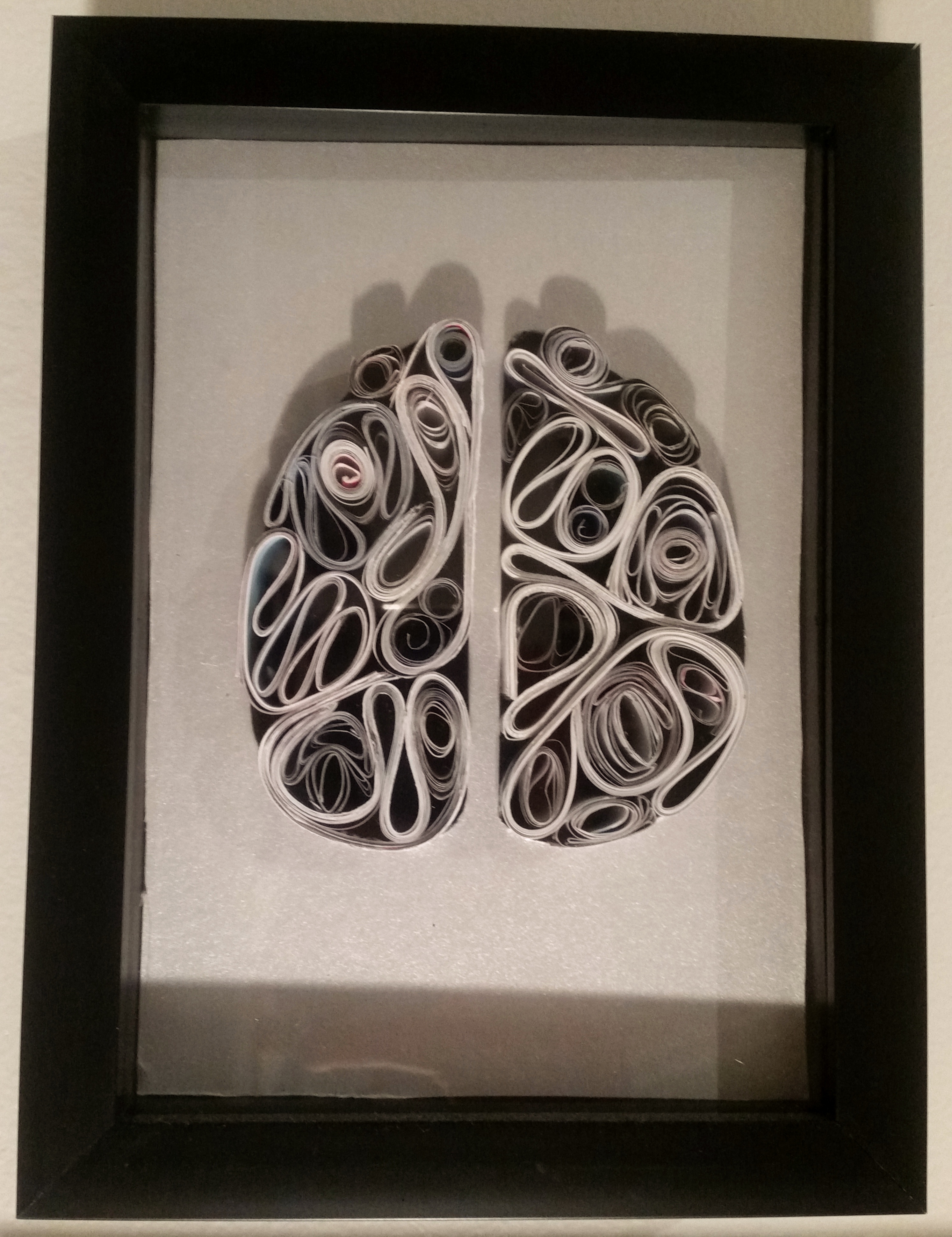
This is a collection of brain art that I made.

2023

SM_smaller

Bark

2020 Candy brain, generated with LAYNII’s LN2_COLUMNS from Faruk Omer Gulban


2020 challenge by OHBM

OHBM_gif.gif

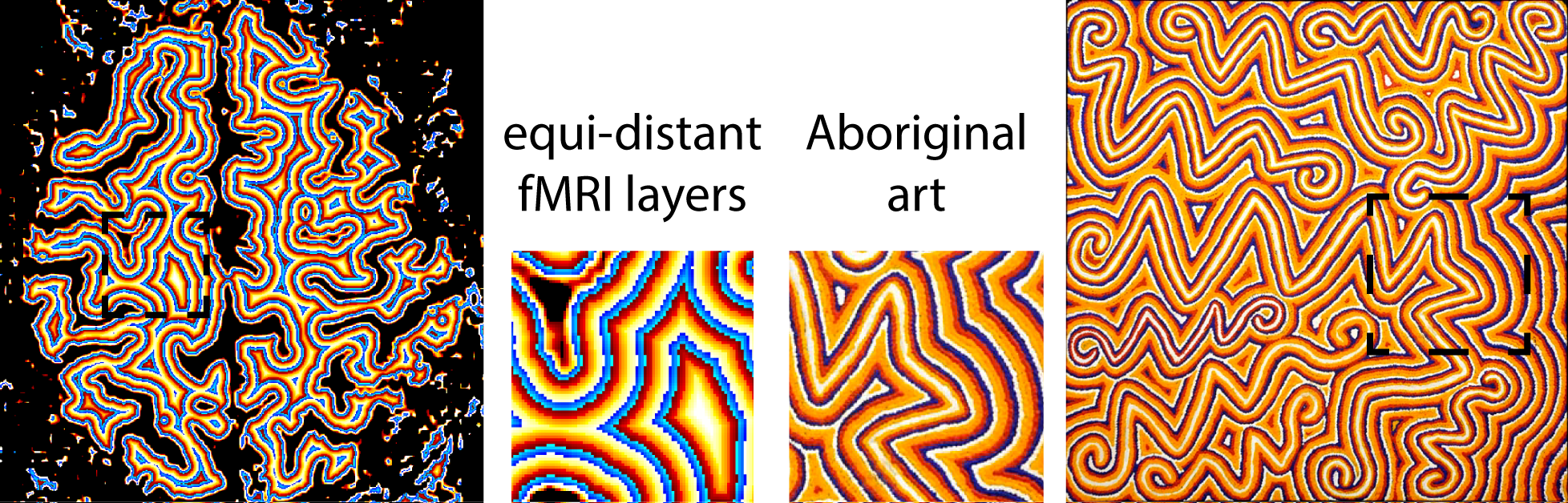
2020: The Australians die equi-distant layers long before is was cool: Aboriginal art in LAYINII.

ezgif-3-288cf14c2f22_.gif

2020: The brain as seen from a precessing proton.ezgif-6-ee5b65c8b37b.gif

2020: Feeling lost in the hunt for resolution. Nothing will ever be high enough

Scale_less_brain-01

ezgif-3-76589f73c589.gif

2019: pulsed source

2019: Verzwirbelter Zwirn II

20190606_193731

2019: spectral brain

rotating_brain.gif

2019: brain shape in in the style of a Cajal drawing of a Purkinje Cell

2018: broken phone screen edited with deep-learning algorithm

IMG_Surf_20181222_112947_processed.jpg

2019: MRI fireworks with broccoli

brokoli.gif

2018: Never ending layers

screens_smal.gif

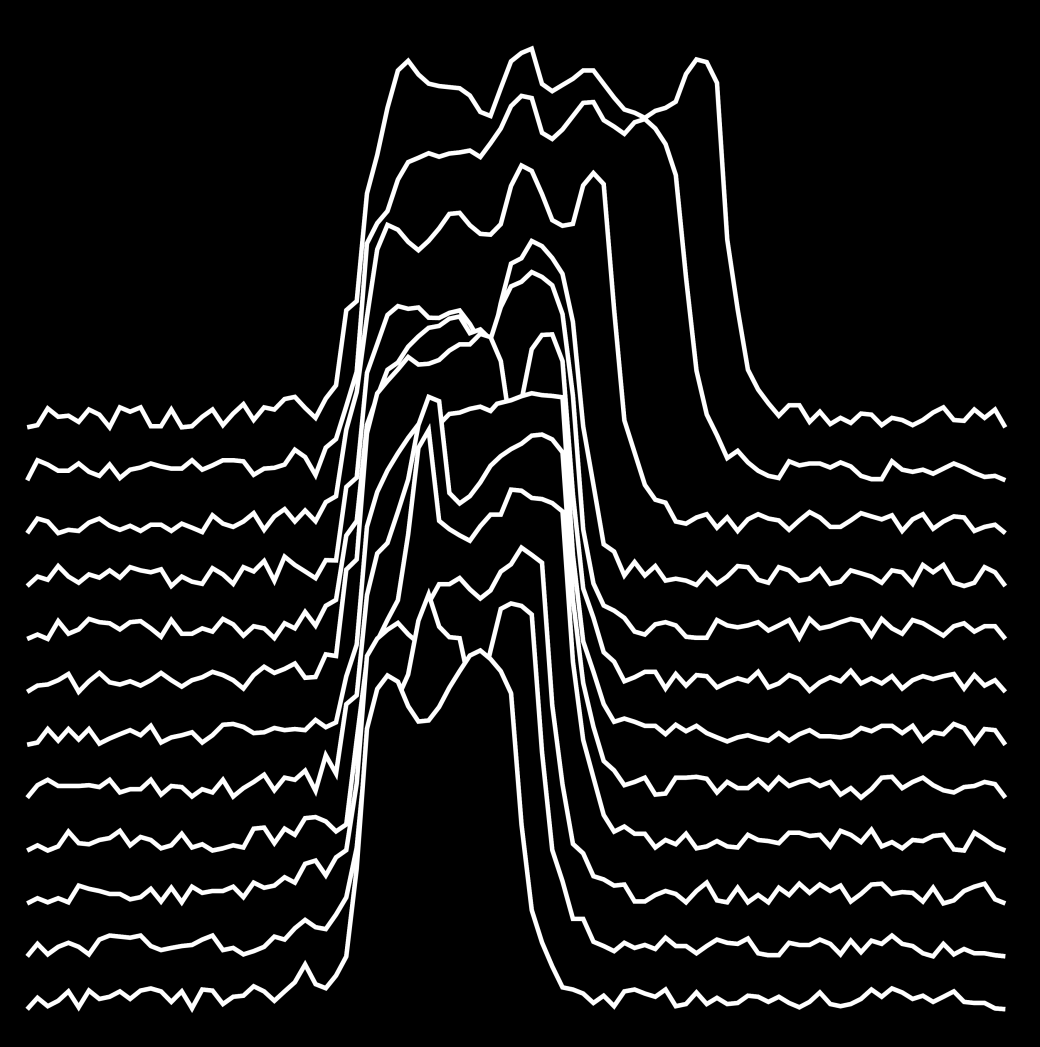
2018: Joy of layering (based on idea from Erika Raven)

The profiles refer to myelin stain profiles of multiple brain areas. The thickest one it from motor cortex and the thinnest one is from sensory cortex. The y-axis refers to gray values of drawings from Theodor Kaehs.

Profiles_black_bg-01.png

2018: The devils brain (3D print, painted with nail polish)

20180819_165505-01

2018: The horned brain

design_2.png

2018: the exploding brain (when the cortical smoothing algorithm is buggy)

3d_smoothing_opti.gif

2018: The firing brain

firing_gif_opti.gif

2018: Physiological noise

gradual.gif

rotation.gif

combi-01.png

2018: You are your brain and your brain is us (Wax on plastic)

20180204_163914-01.jpeg

20180204_163903-01.jpeg

2018: Layer T-shirt

Screenshot 2018-01-27 11.05.46.png

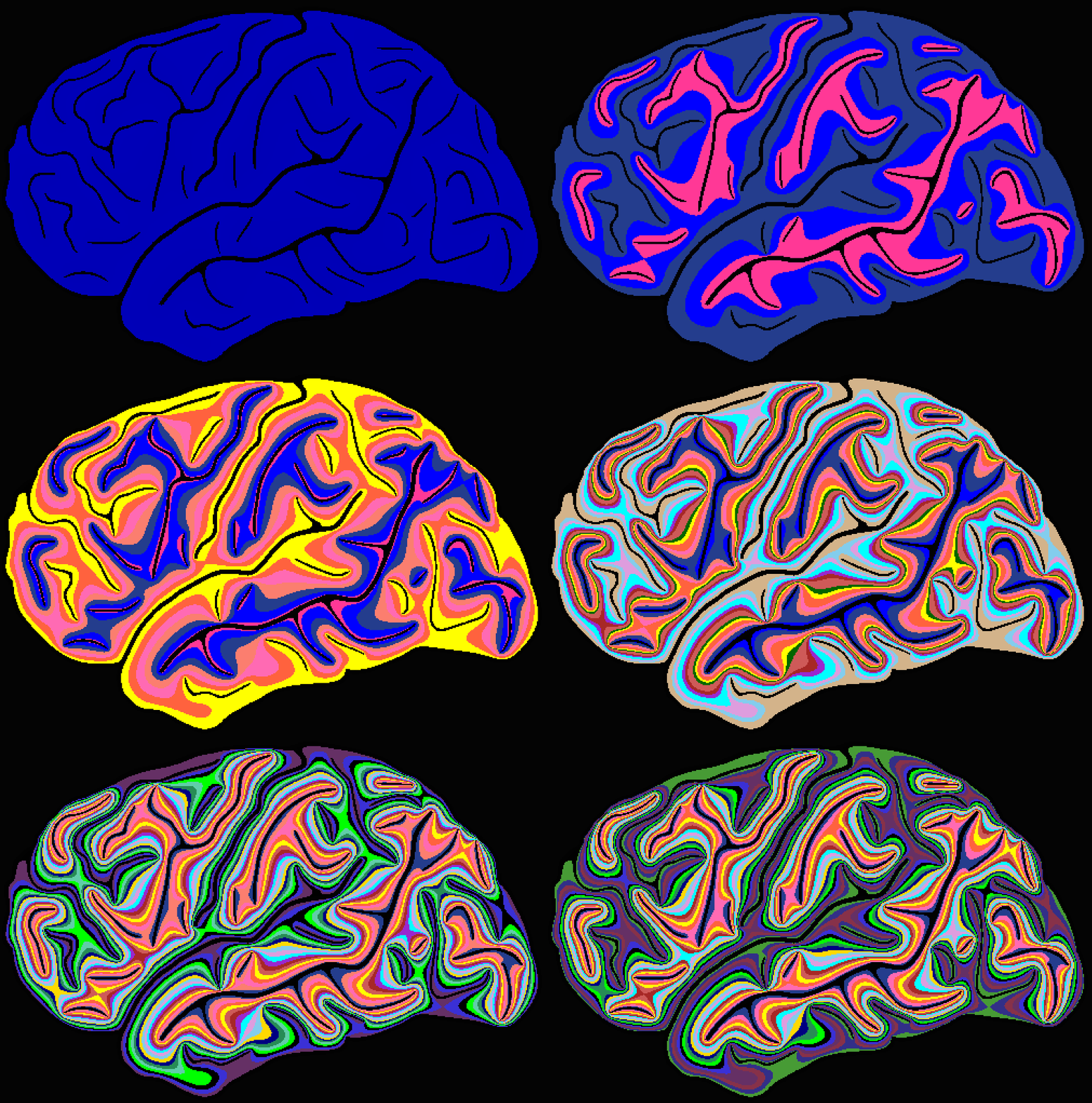
2018: growing layers

GIF_2_TSHIRT.gif

2018: surfaces on volume

all_frames-01-01.png

2018 I am my brain and my brain is me

20180114_124338-01

2017 flow mapping in DC (the voxel state)

flow_mapping.png

2017 Weapon of choice

20171125_095511-01

2016 Fingerprinting

20171125_160842-01.jpeg

2016 Fractal wax

20170226_114949-01

2017 Brain storming

20171125_095519-01

2017 Cajal

20171125_095508-01

2017 Weapon of choice and fractal brain tree

20171125_095456-01

2015: Bark

20171125_083302-01

2015: Brain roots

20171125_083240-01.jpeg

2016: Origami

20171125_082928-01

2015: Zwirbelnder Zwirn

20171125_082734-01

2016: Brain ball (Franklin Institute gift shop)

20171125_083115-01-01

2016: HAWAII: Surfing the surfaces

surf_gif

2016: Aborigines: They did equi-distant long before it was cool

aboriginal

2015: paper

20170528_221951-01.jpeg

2016: Future planning insecurity problems of foreign post doc in neuroscience: politics and money

20170806_213554-01-01.jpeg

Meeting minutes of the virtual layer-fMRI event #1

On May 7th 2020, there was a virtual layerfMRI event to discuss current issues in the field.

This meeting was held as a replacement of an originally planned layer-fMRI dinner at ISMRM and happened in succession of an earlier in-person layerfMRI workshop in November 2019 (meeting minutes here).

Below you find the important links of the the virtual event, videos of the talks and discussions, and a summary of the hot topics that were discussed.

Continue reading “Meeting minutes of the virtual layer-fMRI event #1”

Equi-voluming: The Anakin Skywalker of layering algorithms

Authors: Renzo Huber and Faruk Gulban

When you want to analyze functional magnetic resonance imaging (fMRI) signals across cortical depths, you need to know which voxel overlaps with which cortical depth. The relative cortical depth of each voxel is calculated based on the geometry of the proximal cortical gray matter boundaries. One of these boundaries is the inner gray matter boundary which often faces the white matter and the other boundary is the outer gray matter boundary which often faces the cerebrospinal fluid. Once the cortical depth of each voxel is calculated based on the cortical gray matter geometry, corresponding layers can be assigned to cortical depths based on several principles.

One of the fundamental principles used for “assigning layers to cortical depths” (aka layering, layerification) is the equi-volume principle. This layering principle was proposed by Bok in 1929, where he tries to subdivide the cortex across little layer-chunks that have the same volume. I.e. gyri and sulci will exhibit any given layer at a different cortical depth, dependent on the cortical folding and volume sizes (see figure below).

With respect to applying equi-volume principle in layer-fMRI, the equi-volume layering has gone through quite a story. A plot with many parallels to Anakin Skywalker.

In this blog, the equi-volume layering approach is evaluated. Furthermore, it is demonstrated how to use it in LAYNII software.

Continue reading “Equi-voluming: The Anakin Skywalker of layering algorithms”

Quality assurance measures for layer-fMRI time series: How to obtain them in LAYNII

Doing layer-fMRI sometimes feels like doing nothing more than noise management. One must have a full grown masochistic personality trait to enjoy working with such messy data. Namely, layer-fMRI time series data suffer from each and every one of the artifacts in conventional fMRI; they are just much worse and there are also a few extra artifacts that we need to worry about. As such, layer-fMRI time series usually suffer from amplified ghosting, time-variable intermittent ghosting, non-gaussian noise, noise-coupling, motion artifacts, and signal blurring.

Thus, we need to have a set of metrics that tell us whether or not we can trust our specific data sets. We would like to have quality assessment (QA) tools that tell us when we need to stop wasting our time on artifact-infested data and throw them away. It would be extremely helpful to have tools that extract a basic set of QA metrics that are  specifically optimized and suited for sub-millimeter resolution fMRI artifacts.

This blog post discusses a number of these layer-fMRI specific QA metrics and describes how to generate them in LAYNII.

Continue reading “Quality assurance measures for layer-fMRI time series: How to obtain them in LAYNII”

Removing unwanted venous signal from GE-BOLD maps: Overview of vein removal models and implementations in LAYNII

Did you acquire your data with GE-BOLD EPI and now worry about draining vein contaminations?  There are several models out there for post-processing that should help you to tease out the tiny microvascular GE-BOLD signal that you care about and help you to remove the dominating macro-vascular venous signal. However, note that some of these vein-removal models work better than others. None of the models is perfect! But some of them are useful. The most relevant approaches are implemented in the LAYNII software suit on a voxel-wise level.

In this blog post, I want to describe these de-veining models and how to use them to get rid of unwanted macrovascular venous signals in LAYNII.

Continue reading “Removing unwanted venous signal from GE-BOLD maps: Overview of vein removal models and implementations in LAYNII”

Referral to description of layerification algorithm in LN2_LAYERS

How can one assign layers to discrete voxels? Is it possible to perform topographical fMRI analyses across layers and columns directly in the original voxel space that raw data from the scanner come in? 

Continue reading “Referral to description of layerification algorithm in LN2_LAYERS”

layer-fMRI Webinar MBIC 2020

Title: High resolution fMRI: An introductory course for data acquisition and analysis challenges.

Support: This lecture series is finanzially supported by the FPN-MBIC-school. The session on sequences and sequence artifacts is supported (in kind) by the York-Maastricht-partnership grant. Faruk Omer Gulban works for Brain Innovation.

Coordinators: Laurentius (Renzo) Huber & Omer Faruk Gulban, Cognitive Neuroscience Department

Email: renzohuber@gmail.com or faruk.gulban@maastrichtuniversity.nl

Dates: 7, 14, 21, 28 July 2020 (4 sessions in total), 3pm to 4:30pm.

Video Conference Zoom link (note that these sessions may be recorded): https://maastrichtuniversity.zoom.us/meeting/register/tJAvcu-qpj8sHNVD71Vcu95et-R14QKRs22T

Continue reading “layer-fMRI Webinar MBIC 2020”

Layer-fMRI VASO worldwide

This blog post gives an overview of the scientific network of researchers that are using the VASO (vascular space occupancy) for applications in layer-fMRI. I tried to give an overview of all layer-fMRI VASO papers published so far and provide a map of all layer-fMRI VASO labs around the globe. Continue reading “Layer-fMRI VASO worldwide”